Redacted Third-Party Pipe Test Report Example for Pipe Sourcing
A buyer-side guide to reading a redacted third-party pipe test report: what the cover page, dimensional checks, mechanical results, chemical composition, and report statement actually mean.

Third-party pipe test reports help buyers verify whether a shipment matches the purchase specification before the final payment or loading release. They are not a substitute for supplier selection, factory audit, or a clear purchase order, but they give the buyer a document-based checkpoint before the cargo leaves China.
The example below is a public, redacted report sample. Buyer identity, supplier identity, report number, issuer contact details, signatures, and stamps are hidden. The report was issued by a third-party testing organization; HausPipes coordinates sampling, supplier follow-up, and buyer-side review. We do not present laboratory reports as documents issued by HausPipes.
Redacted report example
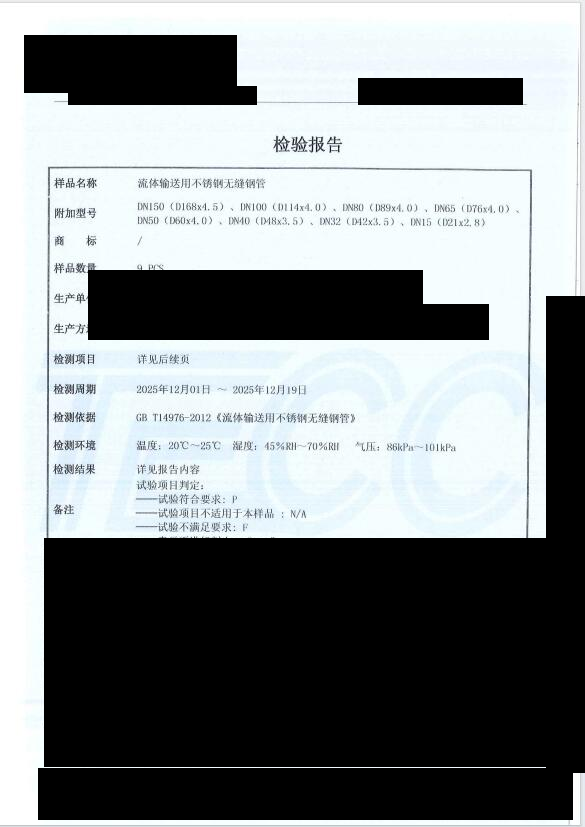
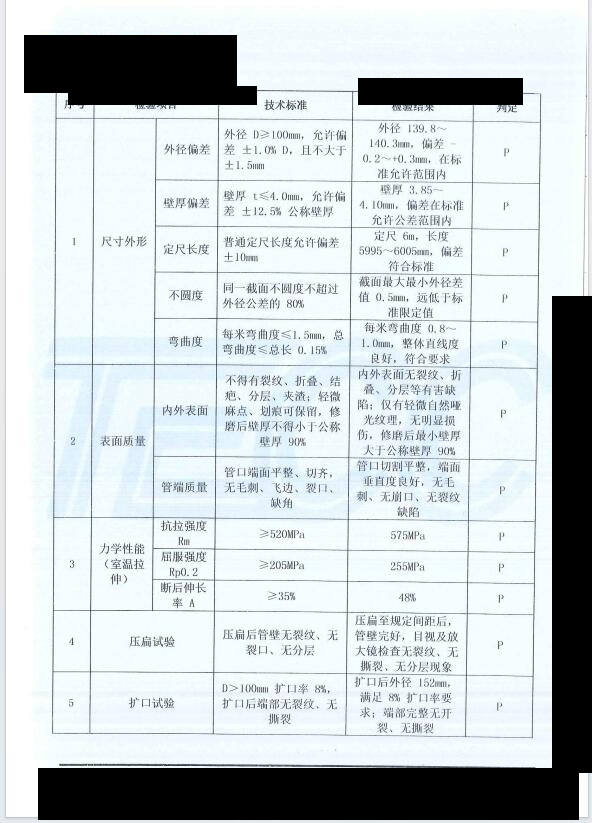
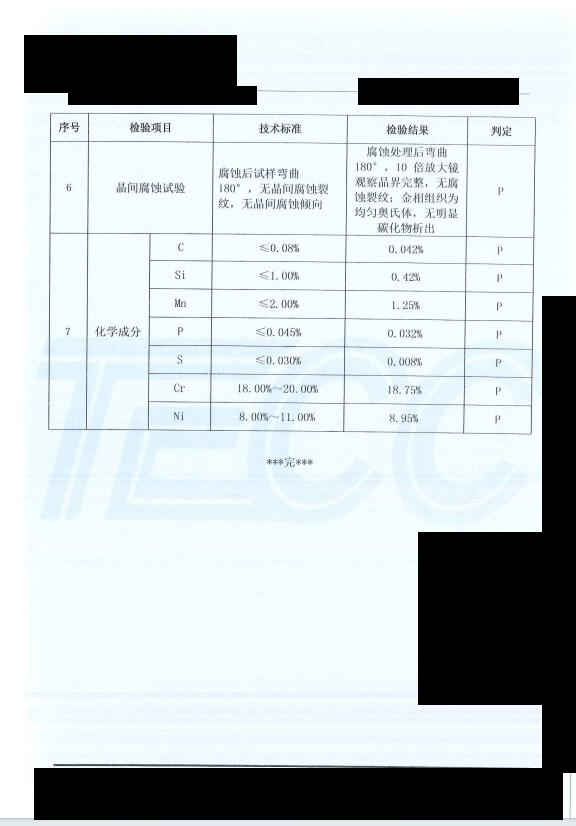
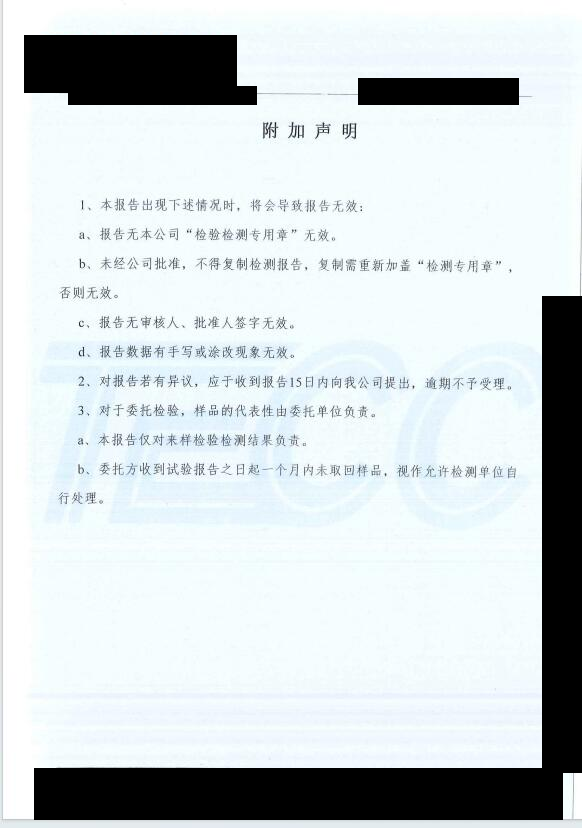
This public example is redacted for confidentiality. Actual report content varies by pipe material, standard, buyer specification, sampling method, and laboratory scope.
What to check on the cover page
The cover page is where buyers should confirm whether the report belongs to the shipment they are about to accept. A useful report should identify the sample name, model or size range, quantity, production party, production address, testing period, test standard, and environmental conditions where relevant.
For pipe sourcing, the most important check is traceability. The report should connect to the purchase order, supplier, batch, size range, and shipment. A clean-looking report has limited value if it cannot be tied back to the goods being loaded.
Before releasing final payment, ask these questions:
- Does the sample description match the product you ordered?
- Does the size range match the DN, wall thickness, pressure class, or material grade in the purchase order?
- Was the test conducted after the relevant production batch was made?
- Can the supplier explain how the sample was selected and sealed?
- Is the report issuer consistent with the lab or inspection body agreed in advance?
Dimensional and surface checks
Dimensional checks confirm whether the pipe matches the ordered size tolerance. Depending on pipe type, this can include outside diameter, wall thickness, length, straightness, roundness, end condition, and surface appearance.
For HDPE and PVC pressure pipe, wall thickness is especially important. A pipe can look acceptable from the outside while sitting at the low end of tolerance or below the required SDR. For steel pipe, dimensional tolerance and surface condition can affect welding, installation, and pressure performance.
The buyer-side review should compare every reported value against the purchase specification and the applicable standard. A “pass” result is useful, but the measured values matter more than the letter alone. If the values sit very close to the limit, the buyer may want additional samples checked before accepting a large shipment.
Mechanical test results
Mechanical tests vary by pipe material. A steel pipe report may include tensile strength, yield strength, elongation, flattening, flaring, hardness, or nondestructive testing. Plastic pipe inspection may focus more on hydrostatic pressure testing, impact resistance, ring stiffness, oxidation induction time, or material-specific performance tests.
Do not treat all “pipe test reports” as interchangeable. The correct test scope depends on the material and application:
- Water pressure pipe needs pressure and dimensional checks.
- Gas pipe requires stricter material and certification control.
- Drainage pipe may require ring stiffness or impact testing.
- Steel pipe may require tensile, flattening, flaring, hardness, chemical composition, and NDT depending on the standard.
- Resin or compound orders may require MFI, density, OIT, K-value, impact strength, or filler content.
This is why the test plan should be agreed before production or before sampling. If the buyer waits until the shipment is ready, the report may not cover the risks that actually matter.
Chemical composition and material verification
Chemical composition is one way to confirm whether the material is within the expected grade range. For steel pipe, composition can confirm whether key elements sit inside the required standard. For plastic pipe and resin sourcing, material verification may involve COA review, resin batch traceability, MFI, density, OIT, carbon black content, K-value, or filler testing instead of a steel-style chemical table.
The principle is the same: the report should answer whether the shipped material matches the material that was quoted and ordered. If the project requires PE100, PE100-RC, PVC-U pressure pipe, stainless steel, or a specific steel grade, the report must be checked against that grade, not against a generic description.
What the statement page means
Many formal reports include a statement page explaining validity conditions: whether the report is valid without a testing stamp, whether copying is allowed, whether the lab is responsible only for the submitted sample, and how disputes must be raised.
Buyers should read this page carefully. A report often confirms only the tested sample, not every pipe in the shipment. That is why sampling control matters. If the supplier chooses and sends a sample without buyer-side supervision, the report may not represent the loaded batch.
For higher-risk orders, ask for controlled sampling:
- sample selection witnessed by the buyer’s agent or inspector
- sample photos before sealing
- batch number and size recorded
- seal number or chain-of-custody record
- lab submission receipt or tracking record
How HausPipes uses reports in a sourcing workflow
HausPipes is not a testing laboratory. Our role is to make the report useful for the buyer’s commercial decision.
In practice, that means:
- confirming the testing scope before sampling
- checking whether the supplier’s proposed lab is acceptable
- coordinating sample selection and delivery where required
- comparing the results against the purchase order and project standard
- following up with the supplier if values are missing, unclear, or close to tolerance limits
- helping the buyer decide whether to release payment, request rework, expand sampling, or hold loading
For pre-shipment sampling methodology, see AQL inspection for pipe imports. For payment structures where the balance is tied to inspection results, see China pipe export payment terms. For export documentation context, see shipping HDPE pipes from China.
If you already have a supplier quotation, test report, or certificate and want a buyer-side review before payment, send the document together with the pipe specification, quantity, destination, and planned loading date.
WhatsApp/email intake is 24/7. We send a human reply within 24 hours. Commission starts at 5%.
Request a Quote → Chat on WhatsApp